Jaw clicking,
locking, or pain?
Let's understand it first.
TMJ dysfunction often involves more than the jaw itself. At TheraCave in Fort Lauderdale, our licensed Doctors of Physical Therapy take time to evaluate posture, joint mechanics, and muscle tone, so we can understand what's actually causing your symptoms before we treat them.
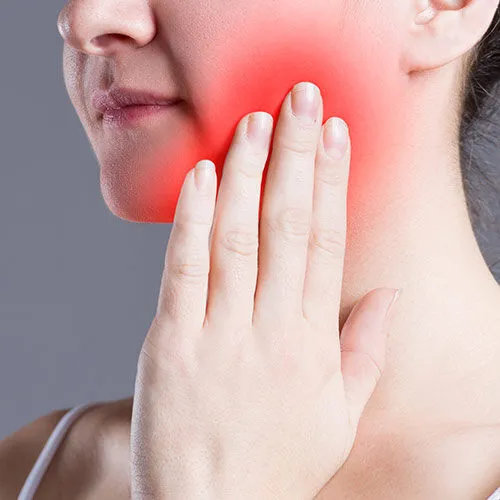
Symptoms patients often describe.
These are the experiences most often associated with TMJ dysfunction. If you're noticing one or more, an evaluation can help identify what's driving them.
Clicking or popping
A click or pop when opening or closing your jaw, often during eating or yawning.
Jaw deviation
The jaw drifts to one side as it opens, sometimes visible in a mirror.
Discomfort while chewing
Soreness or sharp sensations in the jaw joint or muscles when biting, eating, or speaking.
Headaches and facial tension
Dull pressure around the temples, behind the eyes, or along the jawline.
Neck and upper-back tightness
Persistent tension in the neck or shoulders that seems to affect jaw symptoms.
Concern about misalignment
Questions about long-term joint health, and what your options actually are.
Why TMJ symptoms rarely start
in the jaw alone.
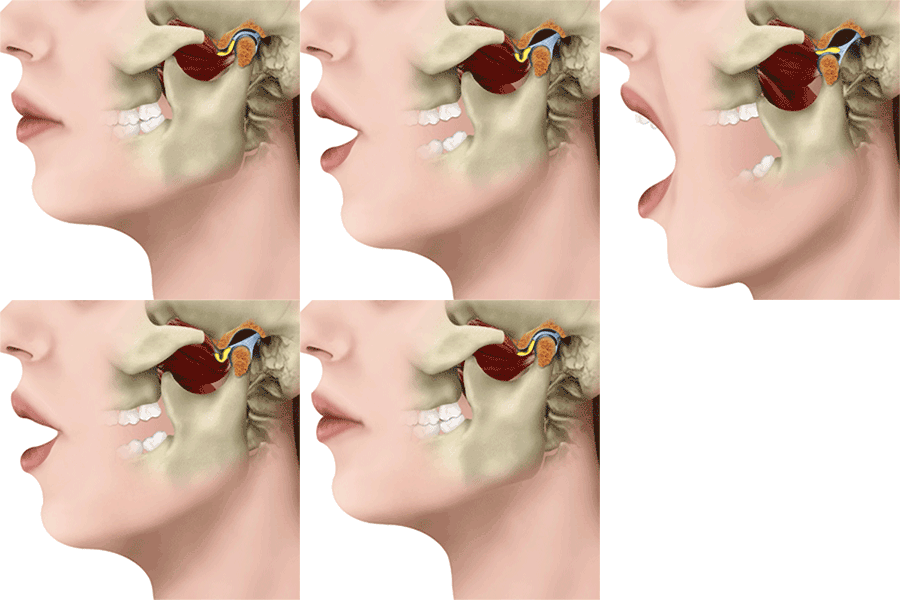
Jaw clicking is often disc displacement with reduction, where a small cartilage disc inside the joint temporarily shifts and repositions during movement. Because the jaw doesn't operate in isolation, posture, muscle tone, and how the neck moves all play a role in how the joint feels and functions.
What we look at during an evaluation.
- 1Forward head postureChanges how the jaw is loaded during everyday movement.
- 2Upper neck and thoracic alignmentInfluences how the jaw tracks as it opens and closes.
- 3Activity of the masseter, temporalis, and pterygoidsChronic tone in these muscles can restrict joint movement.
- 4Stress-related clenchingOften unconscious and easy to miss on your own.
- 5Long-standing loading patternsCompensations the body has learned over time.
In many cases, yes.
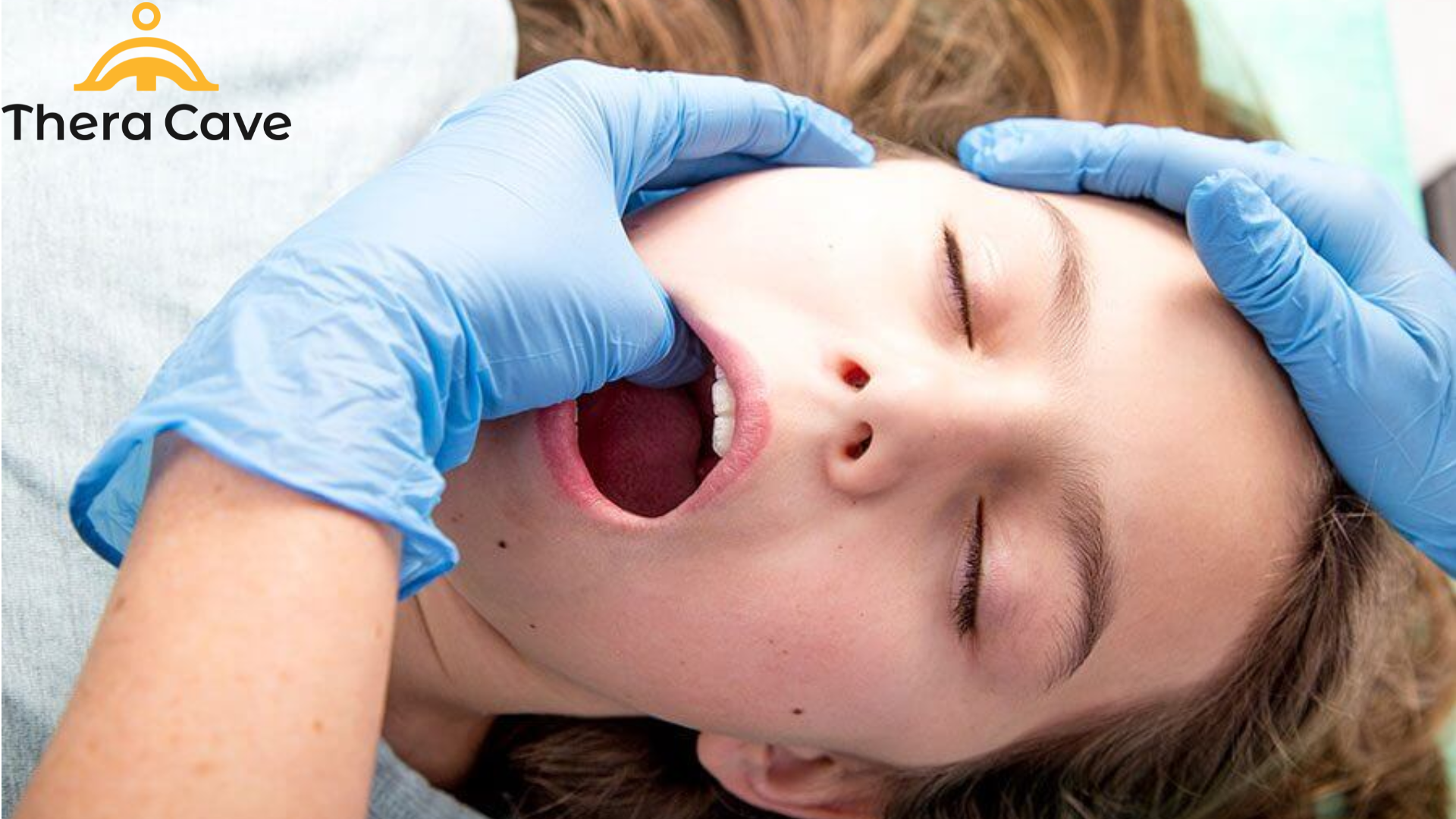
The goal isn't to force the disc back into place. It's to restore the mechanics around the joint so it can move more predictably and comfortably. This is hands-on, evidence-informed care, done one patient at a time.
Hands-on care, not a worksheet.
Every session is 60 minutes of one-on-one work with your DPT. That means manual therapy, guided movement, real-time feedback, and a plan that adjusts as you progress, not a generic exercise sheet you do alone.
Techniques used in
TMJ physical therapy.
Manual therapy, postural retraining, and movement re-education, applied in a specific order during 1-on-1 sessions.
Aligning the upper neck first, then re-teaching the jaw to open and close along a clean, midline path.
Resets the resting state of the jaw and tongue, which builds a foundation for longer-term change.
Retraining the forward-glide motion of the joint without provoking the click.
Visual and tactile cues so the jaw tracks straight on every open and close.
Manual therapy through the neck and thoracic spine to reduce the load above the jaw.
Calming the masseter, temporalis, and pterygoids before asking the joint to move differently.
What about Botox?
Botox is a common treatment for TMJ symptoms. Here's where it can help, and where physical therapy fits in.
Where it can help
- Reducing short-term pain
- Lowering masseter tension
- Calming clenching intensity
What it doesn't address
- Underlying posture patterns
- Joint tracking and disc coordination
- Re-learning movement control
Where physical therapy fits in
- Addresses forward head posture and thoracic alignment
- Works on disc-condyle coordination and joint tracking
- Re-trains everyday jaw movement patterns
- Calms stress-related muscle tone at the source
- Drug-free, non-invasive, evidence-informed care
For many patients, Botox and physical therapy work well together. Your DPT will give you an honest read on what's likely to help most in your specific situation.
The 12-Session
TMJ Restoration Program.
A structured, evidence-informed program built around your jaw, your posture, and your nervous system. Step-by-step, with the same DPT every visit.

Six clinical goals,
worked on in order.
- Calm protective muscle guarding
- Restore cervical and upper-thoracic alignment
- Improve disc-condyle coordination
- Re-educate everyday jaw movement
- Improve chewing mechanics
- Address stress-related muscle tension
What to expect
at TheraCave.
Most clinics treat the jaw as an isolated joint. We look at how the whole system is working.
Hands-on manual therapy
Joint mobilization, soft-tissue and intra-oral techniques performed by a licensed DPT.
Movement re-education
Retraining how the jaw and neck move together, with real-time feedback so changes can carry over to daily life.
Whole-body view
We treat the jaw as part of the spine-neck-jaw system, since that's how it actually works.
Drug-free, non-invasive
No injections, no medications, no surgery. Just hands-on, evidence-informed care from your DPT.
What people we've treated say.
Honest feedback from real patients across Fort Lauderdale and Broward County.
Answers to common
questions.
Things patients often ask before their first visit, answered clearly by our team.
What does TMJ therapy at TheraCave actually involve? +
What usually causes TMJ disorders? +
How long does it take to see results? +
Is TMJ therapy painful? +
Can therapy be combined with Botox or dental care? +
Is it covered by insurance? +
Have questions about your jaw?
Let's talk.
If you're not sure whether physical therapy is right for your situation, start with a free consultation. We'll listen, evaluate, and give you a clear picture of what's going on, whether or not you choose to move forward with us.
Fix the source.